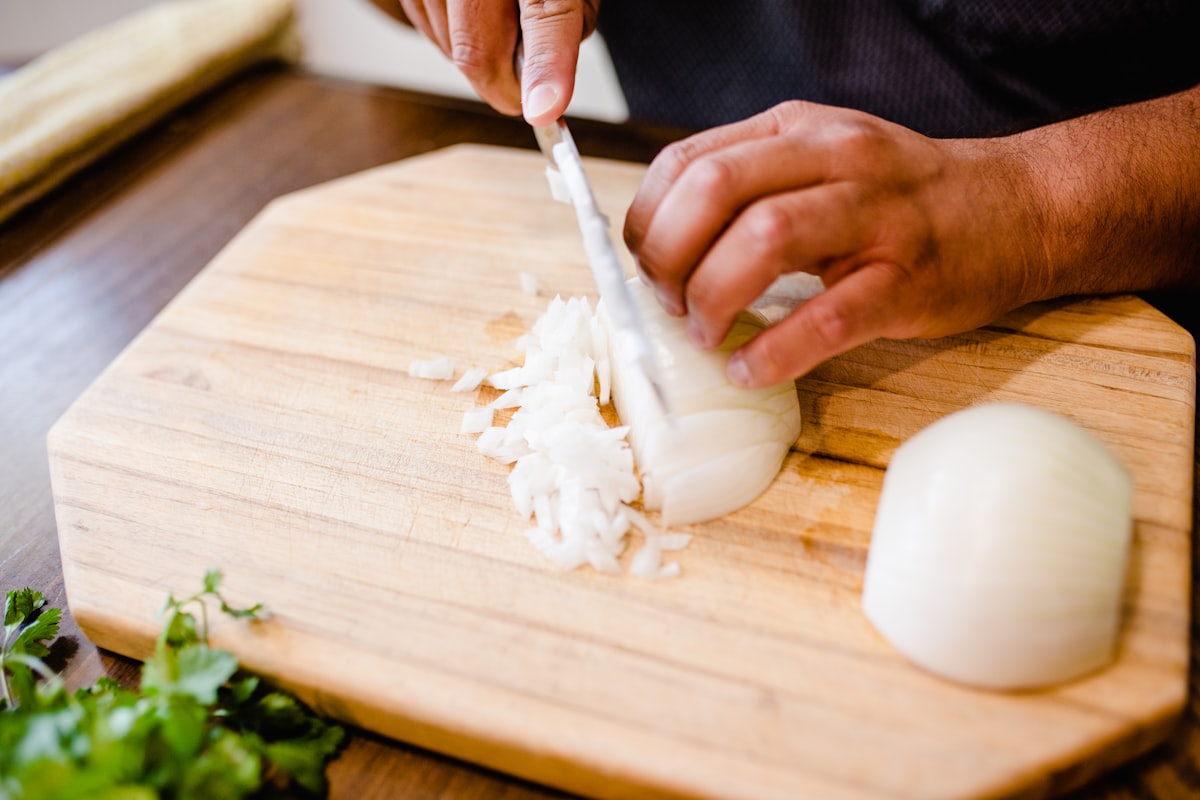
A dull knife is the most dangerous tool in the kitchen — it slips instead of biting, forcing you to push harder until it slides off an onion and into your finger. A sharp knife is safer, faster, and honestly makes cooking enjoyable. The problem is that most people never learn to sharpen, and half of what they do “know” confuses two completely different things. Let’s fix both.
Honing vs. sharpening: the confusion that ruins knives
These are not the same, and mixing them up is why people’s knives stay dull:
- Honing realigns the edge. During normal use, the ultra-thin edge folds over microscopically to one side. A honing rod (the “steel” that comes with knife blocks) straightens it back. It removes almost no metal. Do it often — even before each use.
- Sharpening removes metal to grind a fresh edge. You do it occasionally, when honing no longer brings the sharpness back, using a whetstone or a sharpener.
Think of it this way: honing is combing your hair back into place; sharpening is a haircut. You comb daily and cut occasionally.
How to tell your knife needs sharpening
- The paper test: hold a sheet of paper and try to slice down through it. A sharp knife glides; a dull one snags, tears, or folds the paper.
- The tomato test: a sharp knife bites through tomato skin with no pressure. A dull one slides across it or squashes it.
- If honing no longer helps, it’s sharpening time.
Method 1: The whetstone (best edge, worth learning)
A whetstone (sharpening stone) gives the best, longest-lasting edge and the most control. It takes practice, but it’s a genuinely satisfying skill.
You need: a whetstone (a combo stone with a coarser side ~400-1000 grit and a finer side ~3000-6000 grit is ideal), water, and a towel.
- Soak the stone (if it’s a water stone) for about 10 minutes, until bubbles stop. Set it on a damp towel so it won’t slide.
- Start with the coarse side if the knife is dull, or the fine side for a touch-up.
- Set the angle: hold the blade at about 15-20 degrees to the stone. A rough guide: two stacked coins under the spine gets many knives close.
- Push the blade across the stone edge-first, in a smooth stroke from heel to tip, as if shaving a thin layer off the stone. Use light, even pressure.
- Do equal strokes on each side — say 10 on one side, then flip and do 10 on the other, keeping the same angle. Consistency of angle is everything.
- Feel for the burr: after enough strokes, you’ll feel a tiny rough ridge (a “burr”) on the opposite side of the edge. That means you’ve sharpened to the edge. Switch sides.
- Move to the fine side and repeat with lighter strokes to polish the edge and remove the burr.
- Rinse and dry the knife.
The learning curve is real, but a knife off a whetstone is sharper than most people have ever felt.
Method 2: The honing rod (do this constantly)
This maintains an already-sharp knife — it doesn’t fix a truly dull one, but used regularly it keeps you from needing to sharpen as often.
- Hold the rod vertically, tip on a cutting board.
- Place the heel of the blade near the top of the rod at about 15-20 degrees.
- Draw the knife down and toward you, sweeping heel-to-tip, so the whole edge passes over the rod.
- Alternate sides, 4-5 light strokes each.
Do this every few uses and your edge lasts much longer.
Method 3: The pull-through sharpener (convenient, aggressive)
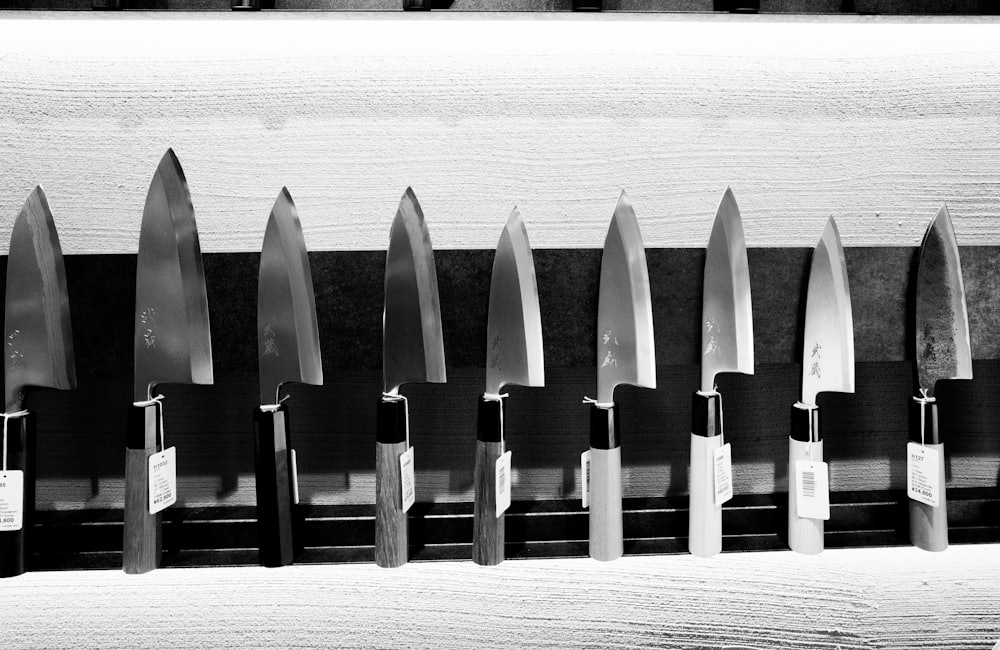
The handheld sharpener with carbide/ceramic slots is the easy option:
- Place it on a flat surface and hold it steady.
- Draw the knife through the slot from heel to tip, with light pressure, a few times (coarse slot first if very dull, then fine slot).
The honest trade-off: it’s fast and idiot-proof, but it grinds away a lot of metal and forces a fixed angle, which wears knives down faster and never quite matches a whetstone. For inexpensive knives or a quick rescue, it’s totally fine — and a pull-through-sharp knife beats a dull one every time. For knives you love, use it sparingly.
Which method should you use?
| Situation | Best choice |
|---|---|
| Everyday maintenance | Honing rod, often |
| Restore a dull good knife | Whetstone |
| Quick fix / cheap knives | Pull-through sharpener |
| Best possible edge | Whetstone, coarse then fine |
Keeping your edge longer
Sharpening less often starts with not dulling the knife in the first place:
- Cut on wood or plastic, never glass, stone, or metal — hard surfaces destroy edges.
- Hone regularly with the steel rod.
- Hand-wash and dry knives; dishwashers batter the edge and the heat/detergent harm it.
- Store them protected — a block, magnetic strip, or blade guards, not loose in a drawer where they knock against other tools.
- Use the right knife for the job; don’t hack through bone with your slicing knife.
The payoff is real: fifteen minutes learning a whetstone, plus a few seconds of honing before you cook, and your kitchen knife goes from a dangerous, frustrating slider to a clean, safe, effortless slicer — and stays that way.